


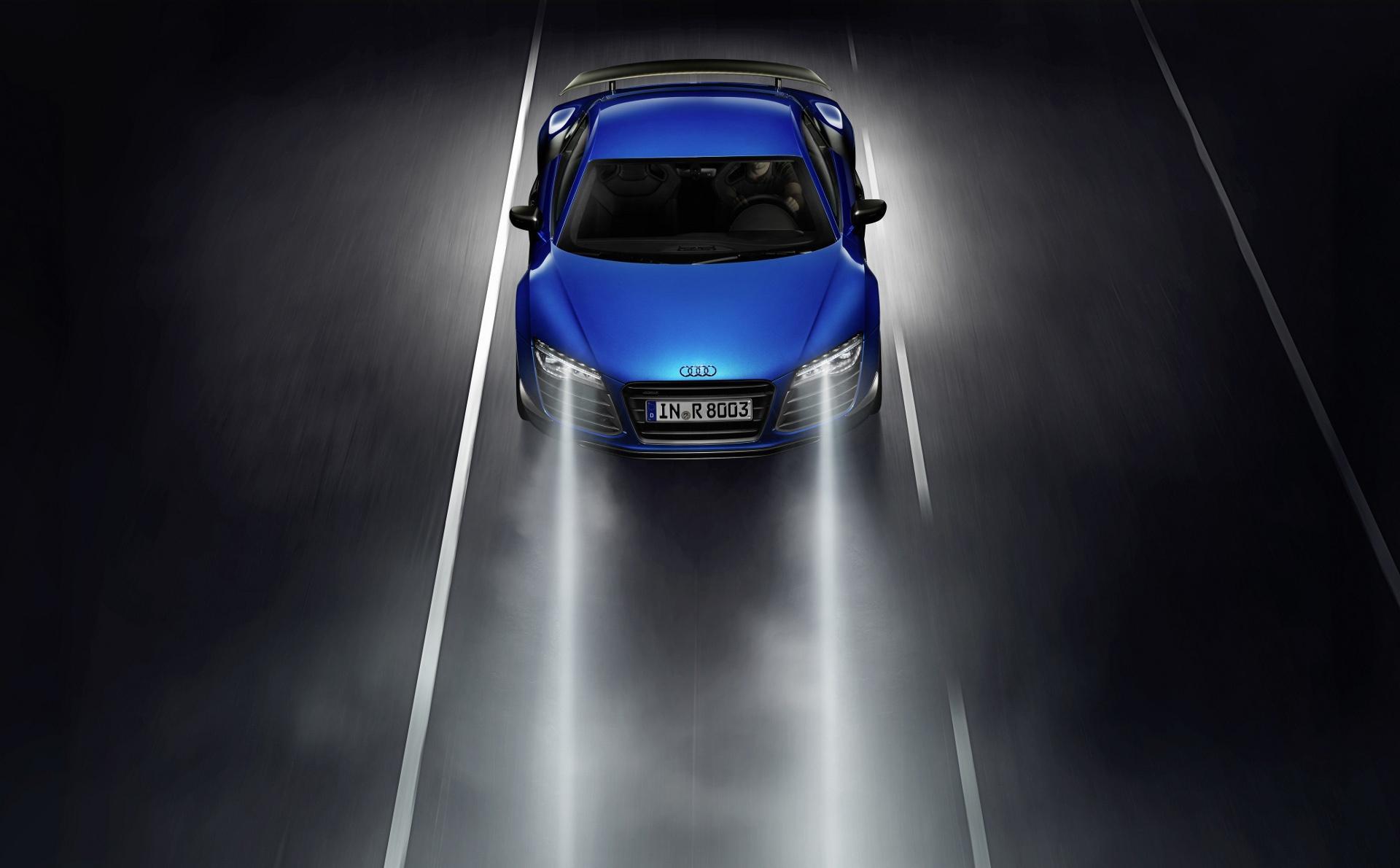
Yesterday, headlights were yellow; today, they are white; and tomorrow… Tomorrow, car lights will be lasers. Things have changed a lot since the 80s when headlights were exclusively yellow. The shift happened on January 1, 1993, which saw the graceful arrival of Xenon, LED, and halogen headlights. Now, the laser is knocking on the door to make its mark, and it will succeed without difficulty. More powerful than all the others, laser diodes offer almost infinite possibilities in terms of design. Performance is there, with much greater brightness than LED, nearly four times, to be precise. Speaking of precision, the laser produces an almost perfect light beam, over several tens of meters.
Historical note:
Do you know why car lights could only be yellow since 1936? It was because of Germany. Not directly, of course, but on both sides of the border, preparations were being made for a Second World War. It was still just a possibility, but just as Germany decided that all car headlights should be white, France chose yellow. Things happened in stages, and by January 1939, all cars had to be equipped with yellow lights. How else could you reliably distinguish an allied vehicle from an enemy at night?
Legislation
As the Highway Code states: "Every motor vehicle must be equipped at the front with two or four headlights emitting forward a yellow or white light capable of effectively illuminating the road at night, in clear weather, over a minimum distance of 100 meters."
The minimum range of car headlights must therefore be 100 m.
Performance comparison between Xenon and LED headlights
If we look at the range of the different devices available on the market, we have halogen lamps with a range of 150 m, Xenon lights with an extended illumination capacity of 250 m, and LED headlights which boast an illumination of 300 m. All these devices thus perfectly meet this requirement, even exceeding it significantly. Yes, but the laser performs even better since its range is 600 m.
Xenon headlights are twice as bright as halogen lamps, which also have the disadvantage of heating up. As for lifespan, xenon bulbs and halogen bulbs are more or less equivalent, with scores between 2000 and 3000 hours. The major drawback of Xenon lights is their prohibitive price.
LED lights are currently gaining popularity and are fitted on most modern vehicles. Since 2011, daytime running lights have been mandatory, and LEDs are suitable for this use. It should be noted that the radiation from an LED is generated by the semiconductors it is made of, and not by the electric current passing through it. This is a notable difference. LED technology offers many advantages with very low consumption and a much shorter ignition time than other lights. LED bulbs have a lifespan similar to that of the car they are mounted on, and they can equip all headlight models.
Laser is the future
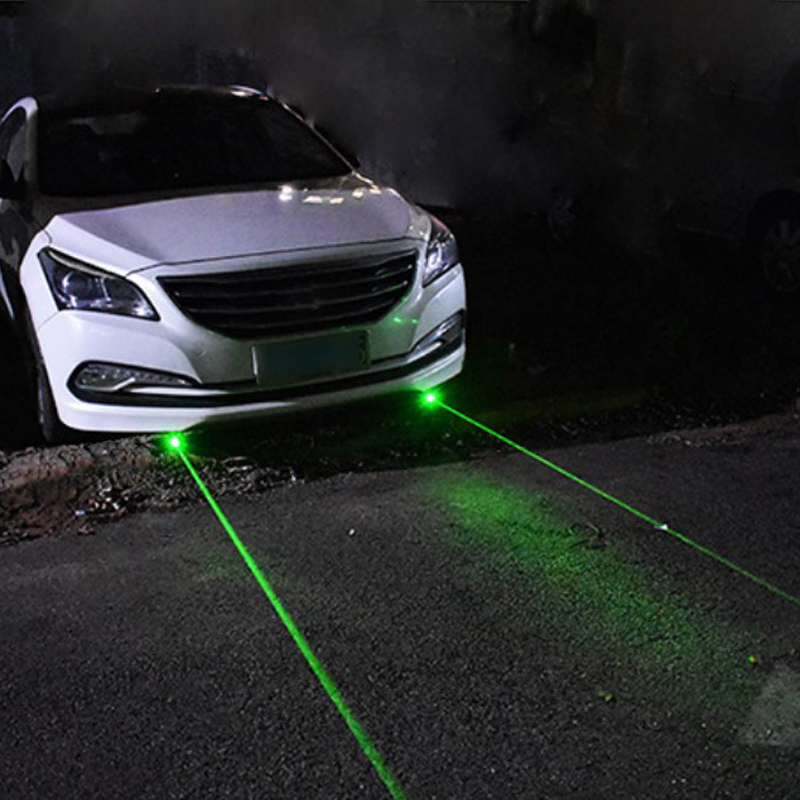
Now, concerning laser, it represents the future of car headlights. Indeed, the characteristics of this technology are extraordinary. The brightness is 1000 times greater than others, and in terms of range, it's double that of its closest competitor in this category, namely LEDs. Moreover, with lasers, there's no longer a need for an optical block, allowing for all kinds of design freedom by integrating lasers into the main projector or placing them in the most strategic locations for optimal visibility and a revolutionary design. However, it's still a very expensive technology, with lights that can cost up to €5,000. In comparison, replacing an LED lighting system would cost €1,500.
An essential safety element
Lighting, along with braking, is a predetermining element of automotive safety. Improving visibility for everyone is crucial to enhance overall safety. There's almost a certainty of having a sustainable lighting system where we no longer have to worry about replacing faulty equipment.
Another avenue for lighting
It is not impossible that OLED will also position itself as a credible alternative to traditional bulbs. With one caveat, however: its low brightness compared to laser or LED technology. But that doesn't prevent them from being used for taillights, turn signals, interior lighting, or dashboards. One advantage that designers will greatly appreciate is the possibility of making flexible lighting elements.


